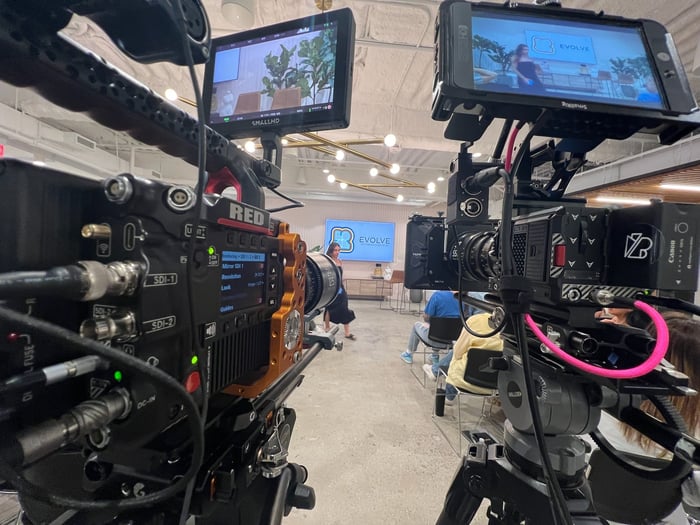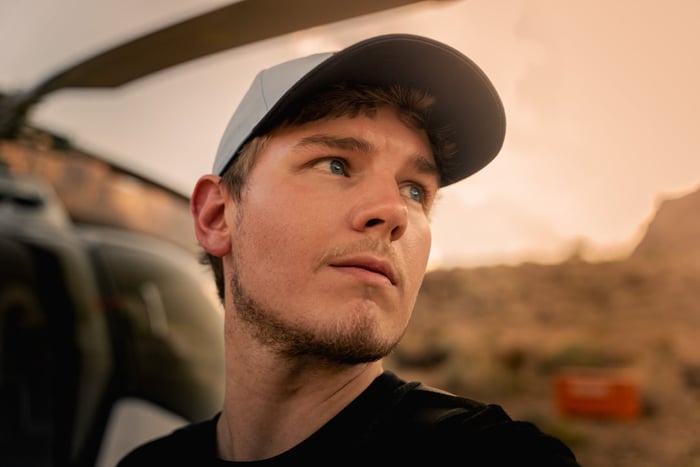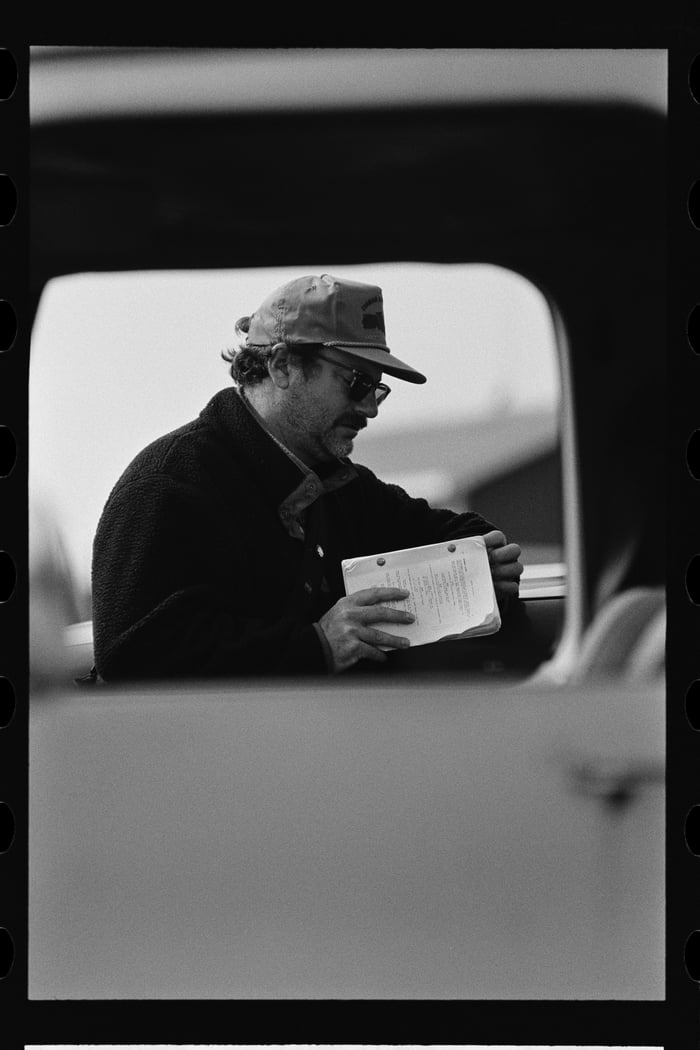
From winning five Cannes Lion awards to making a profound social impact with his Grammy nominated work on Logic's "1-800-273-8255" music video, Andy Hines' career is defined by compelling, emotionally resonant storytelling. We sat down with the writer and director behind the new independent film Little Lorraine for our latest Creator Spotlight to discuss how his global perspective shapes his work, the foundational role of story and the lessons he learned from legendary directors.
If you met a stranger at the airport and they asked what you do, how would you describe yourself to them?
I’d say I’m a writer and director. My career has taken me from Grammy-nominated music videos to commercials and now to feature films. I run a company with my wife, Olivia, called Off Site Films. What I really do is take lived experiences, whether they’re intimate, cultural, or adventurous—and translate them into cinematic stories that move people.
Off-site Films has a global reach, and your work has taken you around the world. How does this international perspective and travel influence the stories you choose to tell and the way you produce them?
I’ve been traveling around the world with my photographer father since I went to Africa at age six. Seeing the world like that at such a young age gave me a broad world view that has given me a unique perspective and interest in humanity. Travel always forces me to stay adaptable. Shooting in foreign countries reminds me that storytelling is universal but always shaped by place. Each environment asks something different from me as a director. light, weather, cultural rhythm, how people even respond to a camera. That perspective keeps my work honest and rooted in the truth of each setting, not just in my own ideas.
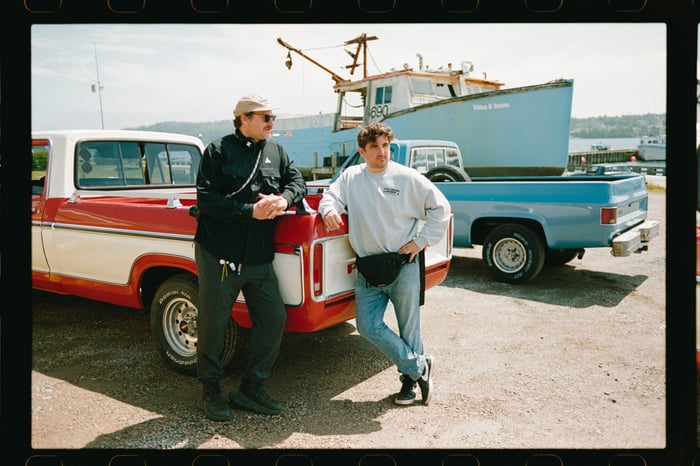
Who are some of your biggest influences in the world of producing and filmmaking that have shaped your approach to building and running Off-site Films?
Werner Herzog showed me that obsession and grit can be just as important as talent. Tarsem revealed the power of surreal imagery balanced with intimacy. David Fincher taught me the art of precision and discipline. Spike Jonze and Michel Gondry remind me always to include some level of humor or lightness in my work. Beyond those giants, I’ve been shaped by peers and collaborators who prove that you can deliver world-class work without a massive budget.
Can you discuss the role of storytelling in your work?
It begins with Story. Storytelling is the foundation of everything I do. Whether it’s a commercial, a music video, or a feature film, story is what cuts through the noise. I care less about gimmicks and more about emotional truth, what it means to be human, to connect, to struggle, or to celebrate. When you center story, even branded content rises above marketing and becomes something worth rewatching.
How do you stay inspired and motivated creatively?
I feel like so much of my day is spent thinking over ideas, being inspired by the places I’m in or the places I’ve been and the people I meet. I have eight or nine movie ideas that I am constantly looking for ideas to include in those stories, so everything that I experienced in a day is in some regard going towards developing those ideas. I also have a significant book collection that I often dig into for visual inspiration. In general, I find myself to be in an inspired state, and if I feel blocked, I just have to stop what I’m doing and heading into the mountains where I live or to the coast and get out of my studio and away from my desk and into nature.
Tell us about a particularly challenging project you've produced—maybe one with complex logistics or a difficult creative brief. How did you navigate those obstacles to deliver a successful final product?
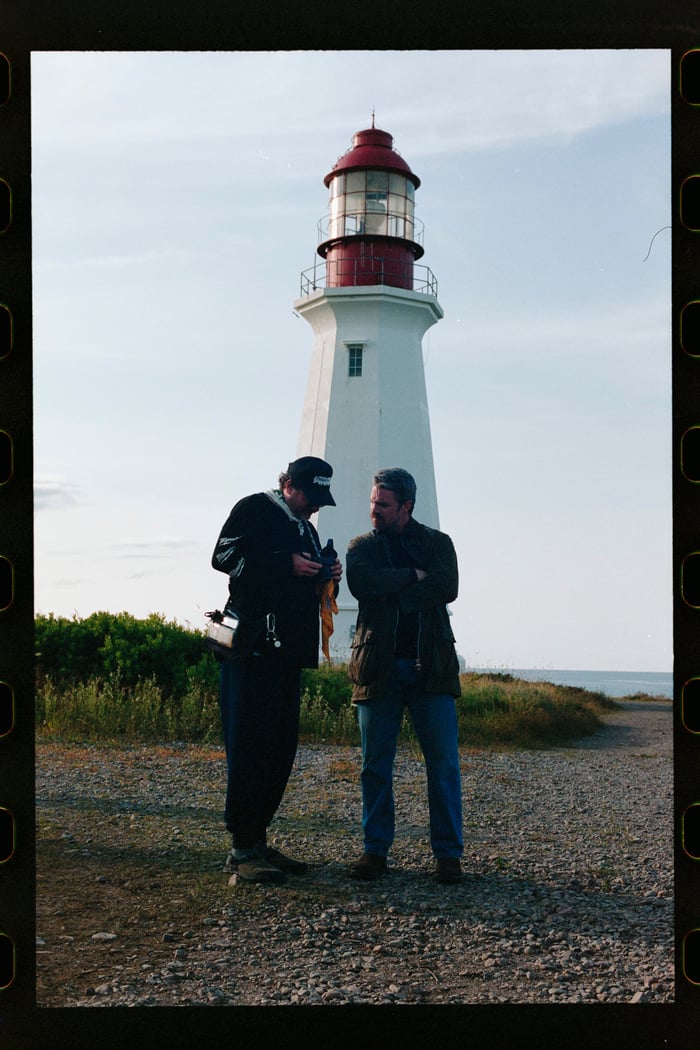
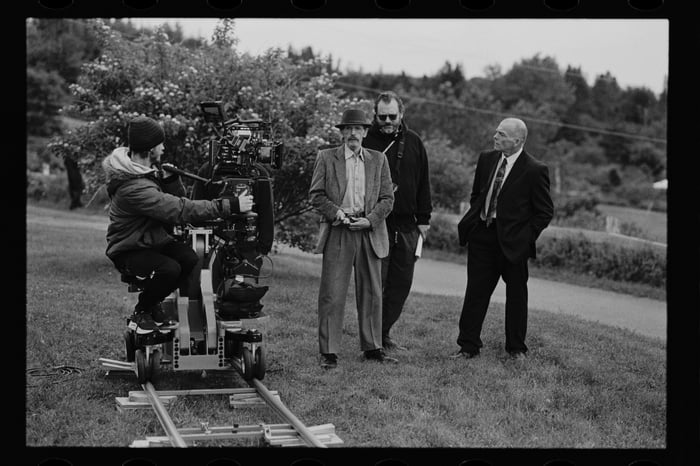
Over the course of my career in music videos and TV commercials, I was presented with so many difficult obstacles that it’s almost impossible to reference something in particular. So, a general example would be the obstacles of personality in my music video career and client expectations in my commercial career. With Little Lorraine, we had a variety of production challenges that were primarily based on making a very ambitious story come to life on what could only be described as a micro budget for what we were looking to accomplish. That being said, the decade of experience I’ve had in directing short form projects Really created an environment for me to thrive with Little Lorraine because so many of the production challenges that I’ve experienced in my short form career had prepared me for the difficulties that would arise in Producing an Indy feature film.
What have been some of the most gratifying moments or projects for you over the course of your career?
There have been certain projects over my career that have moved me further into a lane of success, and some of those projects were very tiny with a small group of people and no expectations to have the response that they did when shared with the public. Other projects such as the commercial for Tribeca film festival that won me three Cannes Lion awards came out of nowhere. Some other gratifying moments for winning three MTV music video awards for projects that I really cared about. I would say in my short phone career the most gratifying moment would be Writing and directing Logic’s music video for his song 1-800. That project had such emotional weight to it, and was a subject matter that is deeply important. This was the project that I was Grammy nominated for, and multiple industry awards and accolades, and it was also the project that made me realize none of that matters at all. The social impact of this video was so significant, that the Library of Congress sent Logic a letter stating that the project had been made a Tangible and numerical difference in the level of teen suicide in the United States.
Can you recall a specific project where having a robust data storage strategy was absolutely critical and saved the day, preventing a major loss of work for your team or client?
There’s actually a great story here, that ties in directly with Glyph because this was A moment in both the advance of technology of Cameras as well as my career. I was shooting the video for “one day” by Logic and we were deep in the California desert and my Cinematographer, Jeff Bierman and I went into our DIT truck to discuss the fact that we were shooting on the new ARRI LF camera which is essentially a digital IMAX camera, the DIT looked at us and laughed and said, “you guys are gonna need some new hard drives immediately. Who can you send?” The camera shoots such a massive file that we needed a drive that was both large enough to hold the media as well as fast enough to work with the DIT (digital tech) who was handling the footage and working on the color on set. We sent our PA off to look for hard drives and we were so lucky that they found 4 TB Blackbox PRO drives that saved the day. This is forever, a critical data storage moment that I will never forget.
From your perspective as a director, what are three ‘must-haves’ for every successful film production?
I think the first thing is a great story and good intentions, followed by a crew that both believes in you and supports your vision, and the last thing is the camera and lens that is most suitable to capture that story, and as I have now learned the hard way, the right data solution to store that media That at the end of the day becomes one of the most important elements of the production.
What advice would you give to aspiring creators?
I think that a lot of directors and filmmakers give the advice to not let budget be a barrier for you to become a visual storyteller. A lot of people suggest using your smart phone camera as your first video camera, and I used to disagree with that but the rapid advance of technology Has now changed my opinion on this. Now, I deeply believe that that is a great place to start and combining a smart phone camera that shoots at 4K resolution with the amazing camera and editing apps available on that same device, makes it almost impossible to say “I just don’t have the tools to do what I want“. The first building block is a great story, and I think spending the most amount of time on both finding that story and shaping it is the biggest part of the process. Filming it becomes the next stage, but editing it is really the bulk of where you will be making your work come to life.
It's clear that for Andy Hines, it all begins with Story. We appreciate him sharing his insights into the director's craft and pulling back the curtain on various things behind the scenes. We look forward to watching Little Lorraine when it's released in early 2026. You can follow all the compelling work from Andy and Off Site Films on their official website and Instagram @offsitefilmsinc.