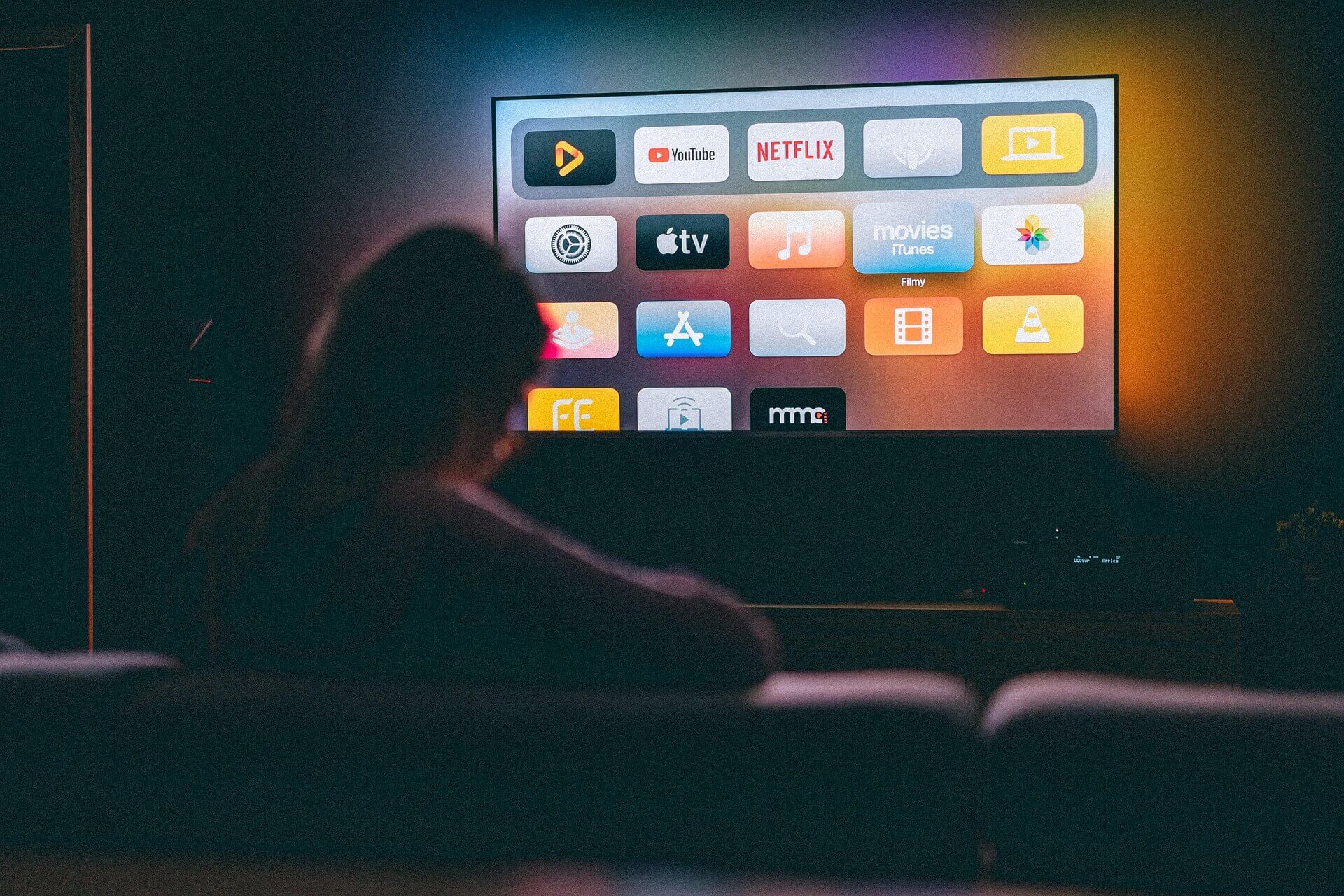
The battle for video dominance isn't happening in Hollywood; it's happening on the biggest screen in the house, the smart TV, and you, the creator, are winning.
The "streaming wars" are over, and the outcome is a fundamental shift in the media landscape. As traditional TV fights for survival through massive consolidation, platforms like YouTube, fueled by your content, are becoming the primary destination for viewers. This new reality gives content creators more power than ever before.
The New King of the Living Room
The days of traditional streaming services being the undisputed kings of the living room are over. Recent data confirms a major pivot in consumer behavior.
According to Nielsen's December 2025 Media Distributor Gauge, YouTube is now the top streaming platform for total TV usage, far surpassing its biggest competitor.
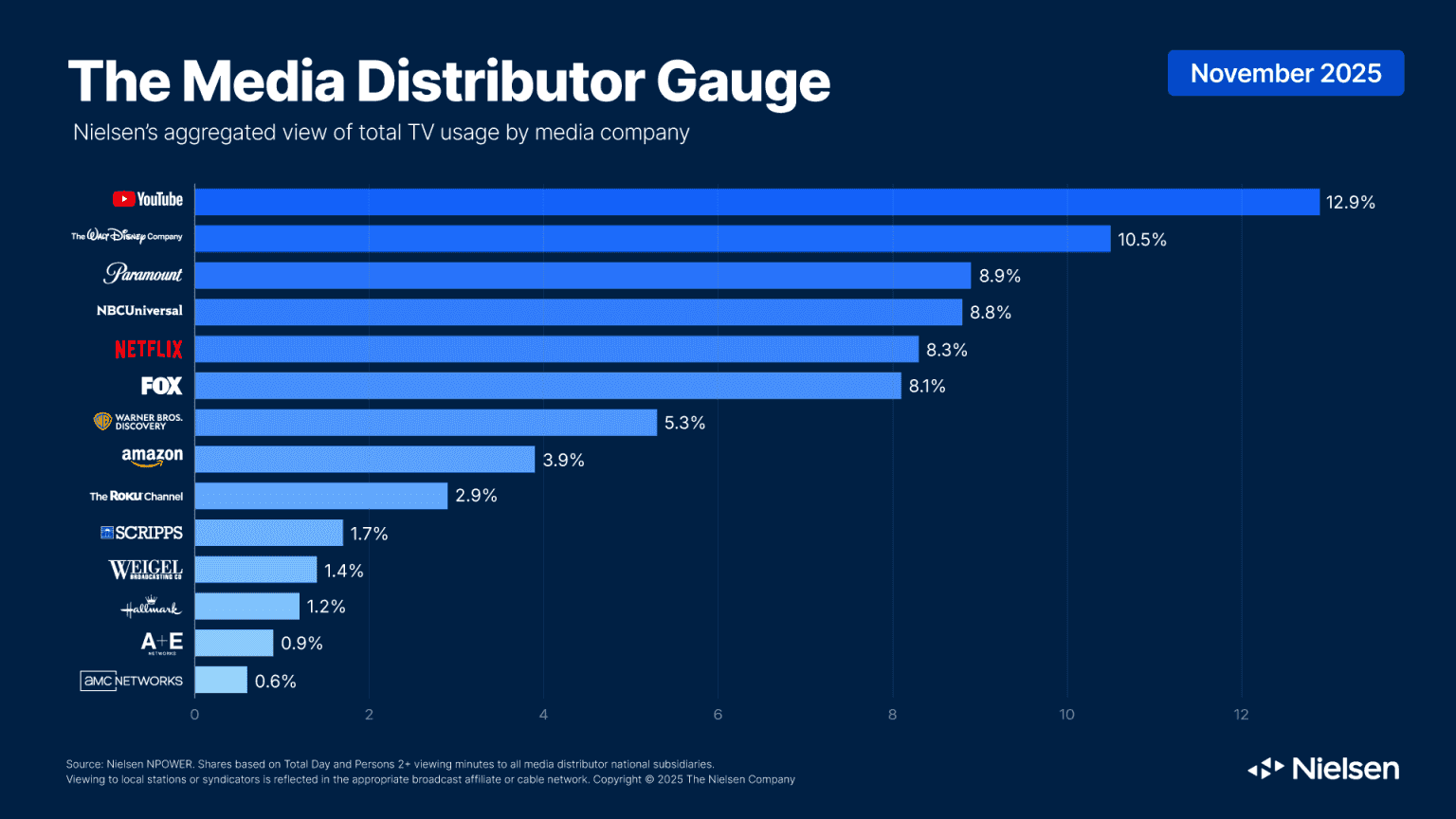
YouTube commands over 50% more market share in total TV watch time than Netflix (12.9% vs. 8.4%). Even a major acquisition by Netflix, such as the hypothetical purchase of Warner Bros, would still leave their combined viewership trailing behind YouTube, as admitted by Netflix co-CEO Greg Peters during the UBS 2025 Global Media and Communications Conference.
Creators Are the New Media Giants
This monumental shift is directly linked to the booming creator economy. The year 2025 saw a 79% increase in payments to creators compared to 2024. Content creators are no longer just making amateur videos; they are building massive, multi-platform media empires that look a lot like traditional studios.
Some of the biggest "new studios" built on the success of YouTube channels include:
Dude Perfect: Expanded with a new YouTube channel, a podcast, a theatrical movie release ("Dude Perfect: The Hero Tour"), and is developing the $100 million "Dude Perfect World" theme park.
Alex Cooper's Unwell Network: Added several new shows and launched Unwell Creative Agency to manage brand partnerships.
MrBeast and iShowSpeed: Are among the most recognized names in entertainment globally.
The success of creator-led content is forcing Hollywood to adapt. Creator-made films are moving into theaters, and creator-led shows are becoming top-ten hits on platforms like Netflix (such as Ms. Rachel's show). As one reality producer noted, the new generation of "unscripted TV" is being made on YouTube at a fraction of the cost, often with higher quality and "no network notes."
Traditional TV's Response: Consolidate or Collapse
While creators build the future, the traditional broadcast television industry is fighting for its life. The traditional landscape is "at the edge of obsolescence" as streaming now accounts for 44.8% of U.S. television usage, surpassing the combined share of cable and broadcast.
The industry's response is massive consolidation, which media policy experts call a necessary "moat against extinction." This scale is needed to gain:
Bargaining Power: Larger groups like Nexstar and Sinclair can negotiate stronger fees and terms.
Efficiency: Mergers reduce duplication, freeing up capital for digital transformation.
Innovation: Only scaled operators can afford the heavy investment required for NextGen TV (ATSC 3.0), FAST channels, and advanced ad-tech stacks.
For you, the creator, this means the legacy industry is shrinking and centralizing just as the creator-led economy is expanding and diversifying. The battle is no longer between two corporate giants, but between a consolidating, traditional ecosystem and a dominant, creator-powered digital platform.
YouTube's command of the smart TV is the final proof: the future of video is unconstrained, entrepreneurial, and powered by you. The opportunity for independent creators to become the next generation of media giants is right now.