Next up in our Creator Spotlight is Joe Lumbroso, a director and cinematographer who proves there’s no "right" way to break into film. Joe went from running startups to shooting DIY mockumentaries with bike messengers, eventually landing gigs with giants like Grubhub and Cartier. He’s a self-taught "style chameleon" who loves to play in the space between raw reality and cinematic beauty. We chat with him about his "film school" days in San Francisco, why he stays camera-agnostic, and how he protects the human heart of a story even when working with the world’s biggest brands.
If you met a stranger at the airport and they asked what you do, how would you describe yourself to them?
I would describe myself as a filmmaker. But I make a living as a commercial and documentary director and cinematographer if I have to be specific. The last few years I’ve been moving into narrative work a little more which is really exciting to me.
Talk to us about the beginnings of your career and how you got started.
There wasn’t a clear path into the industry for me, so I spent several years running small businesses in tech and advertising while studying filmmaking and consuming as much cinema as I could. I tried to align some of those businesses with the film industry, which eventually gave me opportunities to visit larger Hollywood sets. When one of those ventures earned me some money, I bought a Sony HVR-Z1U, along with some lights, C-stands, and basic audio gear, and started shooting shorts and music videos around Portland, Oregon.
Eventually I directed and shot a chaotic little mockumentary with my bike messenger friends that was much better received than I had ever expected. Somehow it ended up in front of someone at Al Gore’s television channel Current TV, who told me they would pay me for a short if I could meet certain criteria. So I made a short documentary about and with my friend Mark Warren Jacques called Ollie The Mind Gap and they bought it.
After getting involved with a couple 48 Hour Film Festival runs and lower budget branded-content and music videos, I felt re-inspired and decided to put forward another serious effort to make that leap into the film industry. A local band had $1,200 for a music video so I decided to make that my personal film-school. So my girlfriend and I crafted this mini-epic live action/stop-frame hybrid made from found objects around San Francisco's Mission District.
Around that time, I moved to New York. Using that music video as my portfolio I started getting on sets and picking up video work in the music industry.
Can you tell us about your earliest influences as well as the people that inspire you today?
When I was in my early twenties the Directors Label series by Palm Pictures came out. It was a DVD series with the first ones featuring the music videos and short films of Spike Jonze, Chris Cunningham and Michel Gondry. Later ones included Mark Romanek and Jonathan Glazer. I would watch these DVDs on repeat, especially the Spike Jonze one. Spike grew out of the skating scene and it made the whole “becoming a filmmaker” thing seem obtainable.
These days, I often think about the work of Harris Savides, Robby Müller, Ed Lachman and Darius Khondji. I also want to operate as well as Sean Bobbitt.
Can you discuss the role of storytelling in your work, particularly when balancing the "human" element with commercial brand needs?
Brands have objectives but audiences aren’t stupid and they are incredibly good at detecting when something is engineered. Audiences don’t engage with objectives, they engage with the story and the people in those stories. Storytelling isn’t something to be layered on top of the objective, it’s the mechanism that makes the message land.
If something feels too polished or overly on-message, you lose credibility. If it’s too raw, you lose clarity. The craft is in holding both at the same time. And once a brand understands that, they tend to give you the space you need to actually protect the story.
You have a deep understanding of media and a passion for human stories; what do you consider to be your signature style?
I don’t know that I have a signature style. Maybe I should. Maybe that would take me further. I’m a little skeptical of anything that feels too easily defined. It can start to become a formula. I do think I have strong preferences that are consistent across my body of work.
On set I often talk about dancing on this razor-thin line that lands somewhere between the naturalistic and the hyper-real. I want the worlds we create to be compelling, engaging and even composed and painterly but still reflect real life. If it’s too raw, it loses intention. If it’s too constructed, it becomes distracting. The work lives or dies in that tension.
Looking back at your award-winning work, what were some of the most gratifying moments or highlights of your career thus far?
I’ll never forget the first time I had a short in a film festival; I watched the audience react as intended to every cut. Laugh with every joke and tear up at the right moments. It’s worth more than any award, positive review or accolade, because it means the work actually connected with people and I find that validating.
How has technology affected your career? What do you see as the future of filmmaking and how do you see emerging technologies impacting the field?
Technology lowered the barrier to entry for me in a meaningful way. Lower priced cameras like the Canon EOS 7D, and later Sony’s mirrorless systems paired with fast lenses, opened up a world of opportunity that just wasn’t accessible before.
At the same time, I think there’s too much emphasis on the technology itself, and that can distract from the intention behind the work. The tools have gotten incredibly good, but that doesn’t automatically translate into something good.
I’ll admit that I consider the vast majority of AI generated video to be unwatchable but maybe my standards are too high. The technology is cool but I’d be rather they focused their energy on making something like filing taxes easier.
What are some of your primary challenges as a filmmaker, and can you tell us about a project that was particularly difficult to overcome?
I think in production we all know that there is never enough money or time. But finding a way to make it work within those constraints is part of the job. We adapt and overcome and ideally that pressure leads to creative decisions that add texture to the work.
What are the three ‘must haves’ (or products you couldn't live without) for every filmmaker?
The first two aren’t products, but I can’t live without a trusted gaffer and focus puller. Without your left and right arms you’re in for a lousy fight.
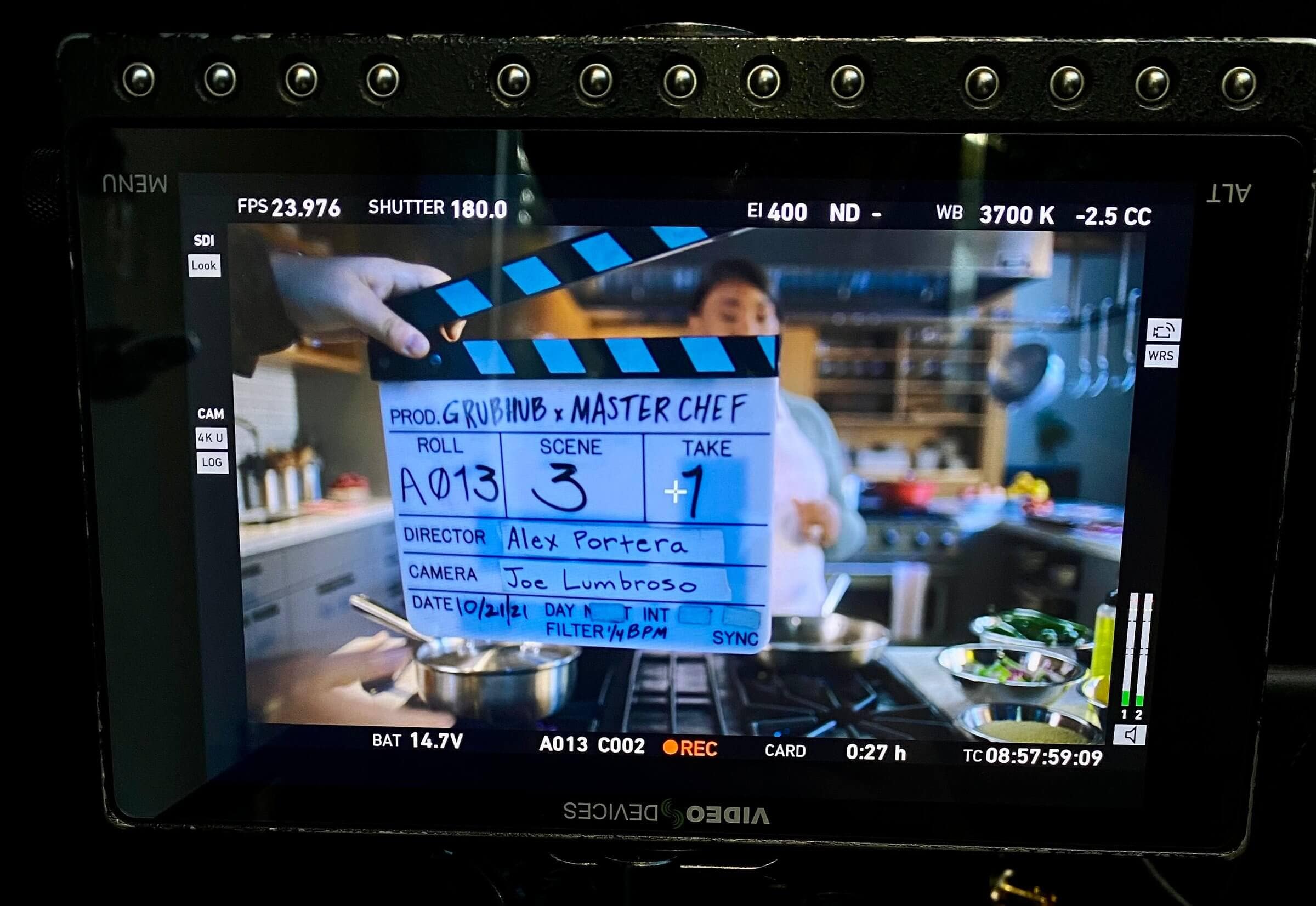
Another one of my must-haves is my 17” Flanders Scientific monitor. It’s my light meter and exposure reference. It’s my most important tool on set when I can bring it. I like to say I am ‘camera agnostic’ meaning I am comfortable using any modern camera system. I may know my Alexa or Sony cameras more intimately, but if I can see a raw image on a monitor I trust, with tools I know, I can be confident in the footage we are capturing.
What advice would you give to aspiring creators who want to follow in your footsteps?
Watch good movies. Study the masters, learn the craft and develop taste which is really the foundation for everything else. Make as much work as you can and pay attention to what’s working and what isn’t. Find people you like and trust and keep working with them. Do what you love and don’t stop. Make good movies.
A huge thank you to Joe for sitting down with us and sharing such a candid look at his journey and the philosophy behind his lens. It’s rare to find a creator who can balance technical grit with such a deep, human-centered approach to storytelling. If you’re looking for some more cinematic inspiration or want to see more of Joe's work, be sure to explore his portfolio at lumbroso.com, follow his visual journey on Instagram @joelumbroso, and check out his creative home at Brilliant Champions.