Every frame tells a story, but behind those frames is a Director of Photography balancing artistry with technical precision. Enter Gabe Harden; a DP whose keen eye for lighting and composition has defined projects for major brands and indie cinema alike. We caught up with Gabe to discuss his journey behind the lens and the evolving role of technology in modern filmmaking.
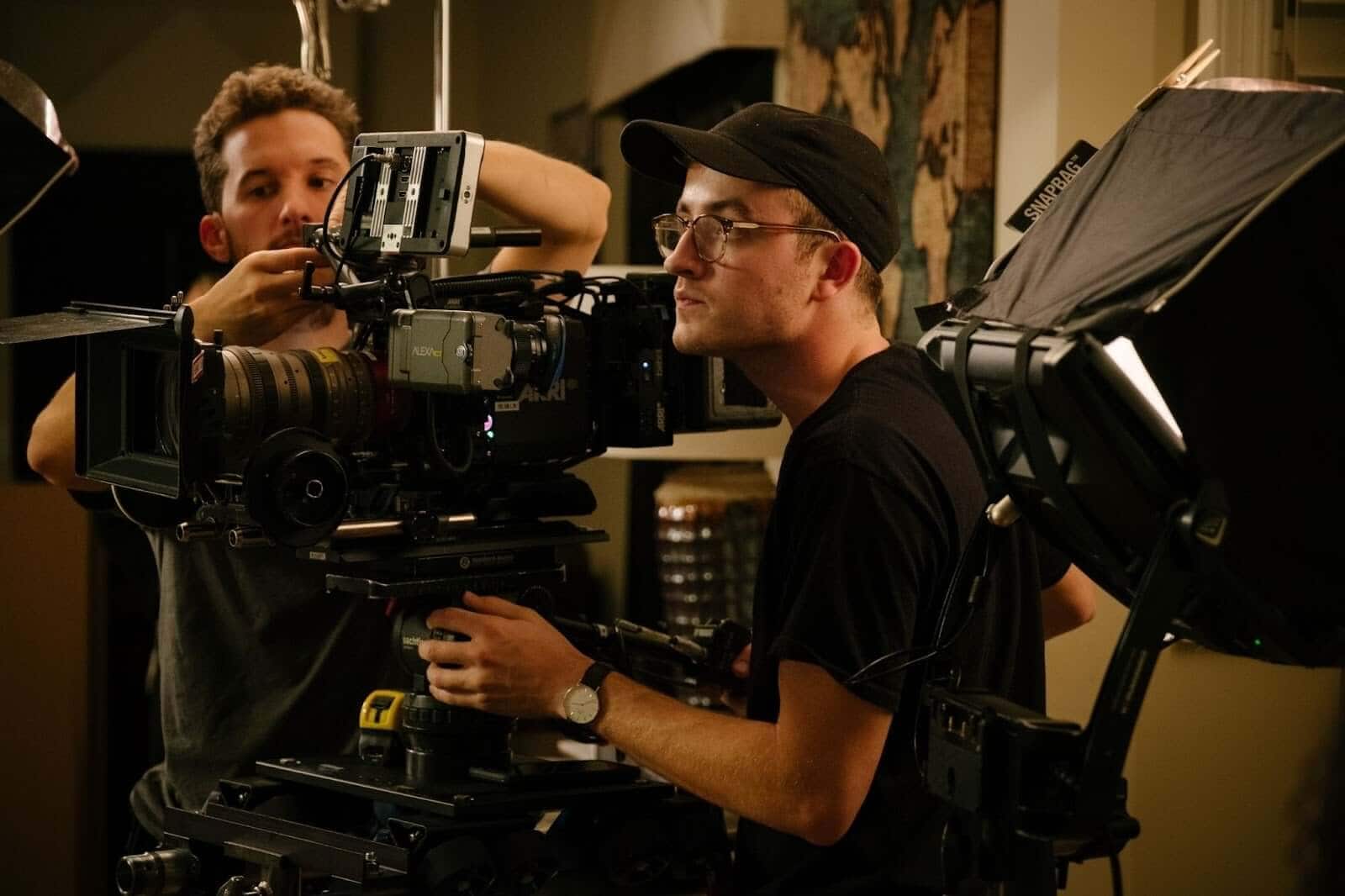
If you’re at an airport waiting for a flight and a stranger asks what you do, how do you describe the role of a Director of Photography beyond just "operating a camera"?
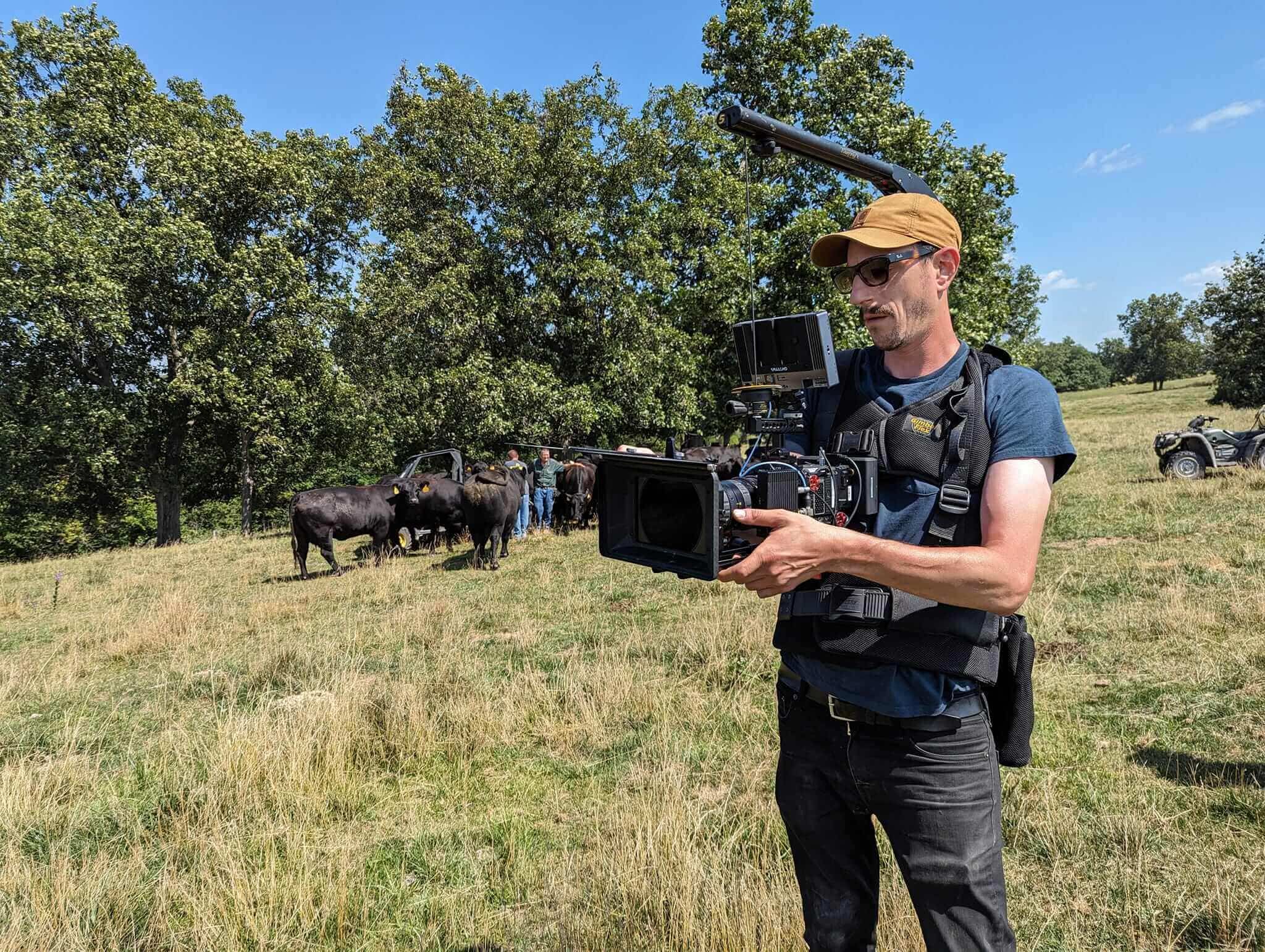
At its base I think the DP’s role is to collaborate with the Director, to translate their ideas, and manifest their vision through a mix of lighting and lensing. This often involves interpreting abstract language we find in scripts and treatments - words like Lonely or Claustrophobic, and building a visual language that expresses those feelings on screen. This collaborative relationship looks different on every job depending on how the Director likes to work and what the needs of the job are. Another part of the job is finding the balance between what is available to you in terms of time, money, and logistics, and choosing creative compromises that still protect the Director’s vision. I think the director of photography occupies a very interesting space right between above and below the line crew on set - which allows for a lot of direct creative input into the final product but also comes with a lot of managerial responsibility in looking out for the protection and correct treatment of the other crew members on set.
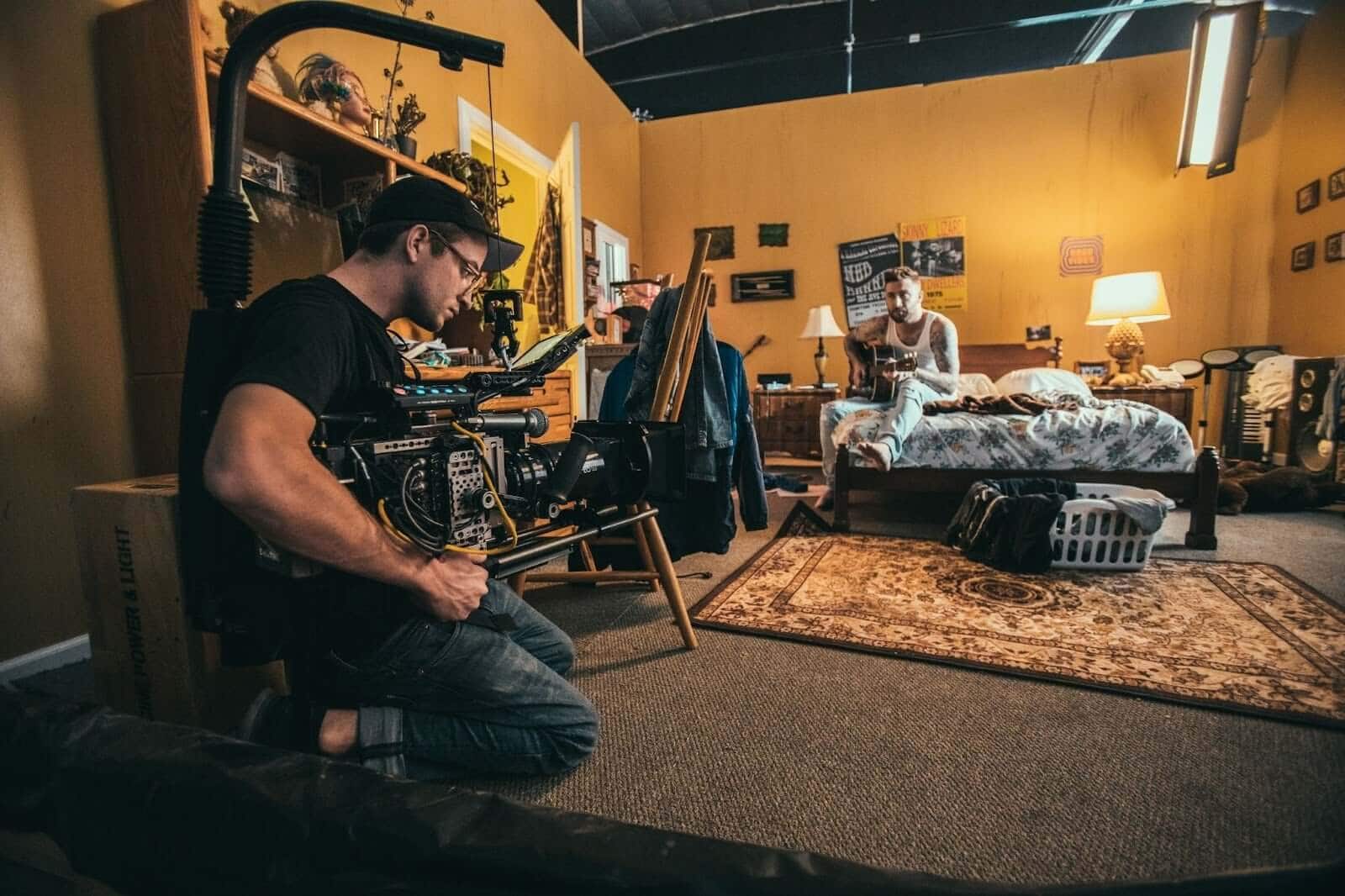
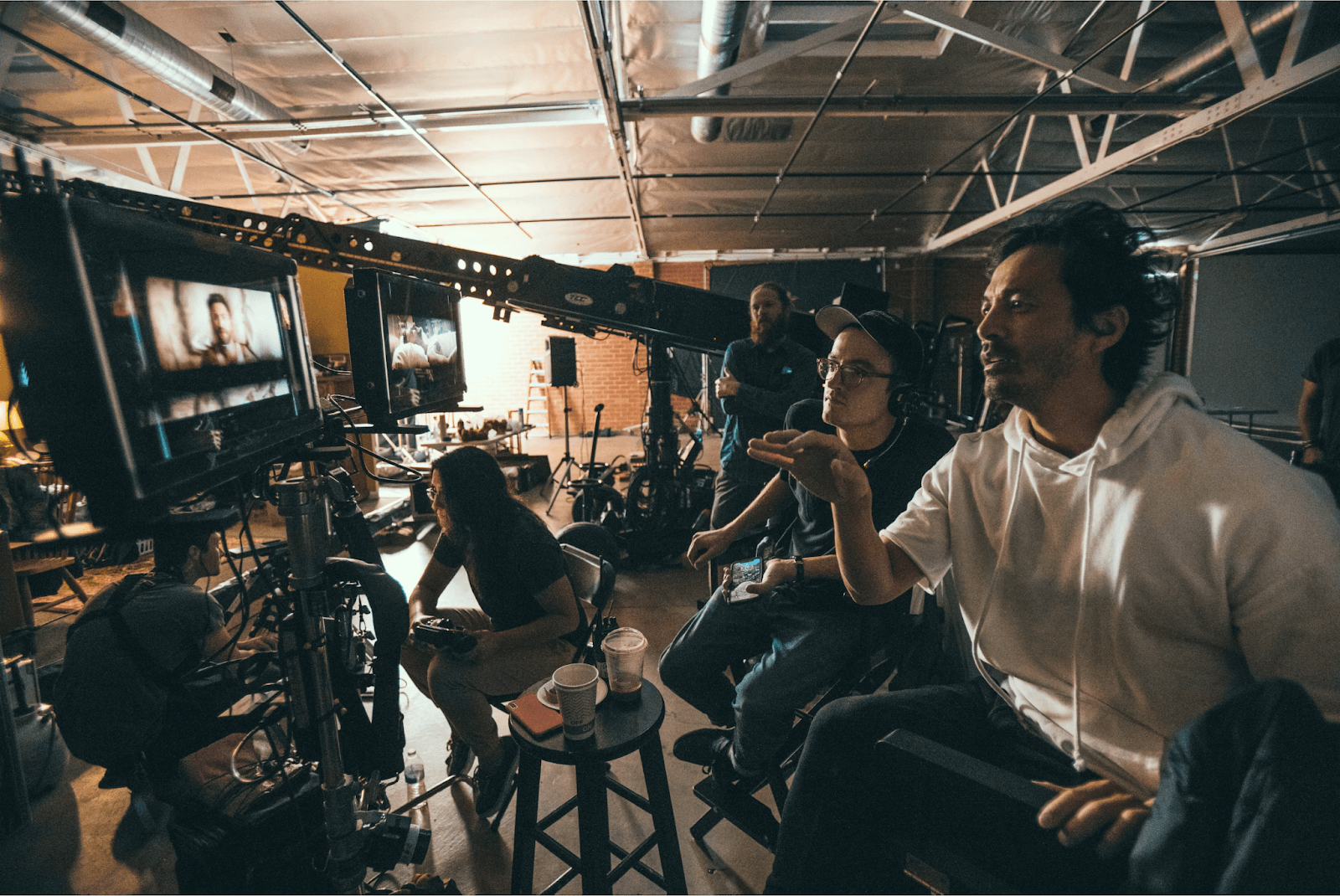 Checking frames with Director Yu Tsai on set for a music video for Jordan McGraw
You grew up in rural Connecticut with artist parents. How did that early immersion in fine art shape the way you look through a lens today?
Growing up with a father who was a painter and professor of fine arts and a mom who was a dancer definitely had an early impact on my motivation to experiment in film and photography. I think spending some early days wandering the halls of the community college where my dad taught, getting exposed to all the different mediums students were dedicating themselves to, painting, sculpture, photography, it made the idea of a creative life feel very tangible. When I was about 13, the college was getting rid of older equipment and I ended up with a Sony Hi-8 camcorder, which immediately turned into me making stop-motion Lego and Playmobil videos with my friends. I’m one of six kids, and we all share a lot of those same creative instincts. There was always an emphasis in our house on making things, building things, and appreciating the beauty in how stuff actually works. That mindset feels very similar to being on a film set, it’s the same blend of problem-solving and visual expression that I grew up around.
You’ve won awards for both a scripted comedy feature (The Social Ones) and a documentary (Born Balearic). How does your visual approach shift when moving between satire and raw reality?
The Social Ones is a fun example for this question because it’s a mockumentary feature — partially scripted, partially improvised — but we still approached shooting it with the methodology of a narrative film. We shot non-linearly, ran two-camera coverage, did full lighting setups with rehearsals — all the approaches you’d expect on a traditional scripted project. But within that framework, we were working hard to make it feel as naturally lit and true to the documentary tone as possible. We’d throw in visible “accidents” and purposeful moments of clumsiness, and embrace imperfections — all in support of the satire and blurring the line between staged and real. Born Balearic was much more of a true documentary with a vérité approach. We spent a few weeks in Ibiza over the course of two summers following a DJ who’s been playing the same beach club for almost 30 years. I don’t shoot a ton of documentary but when I do it’s a fun exercise to pull myself as far from the overcontrolled and overproduced world of commercial and narrative as possible
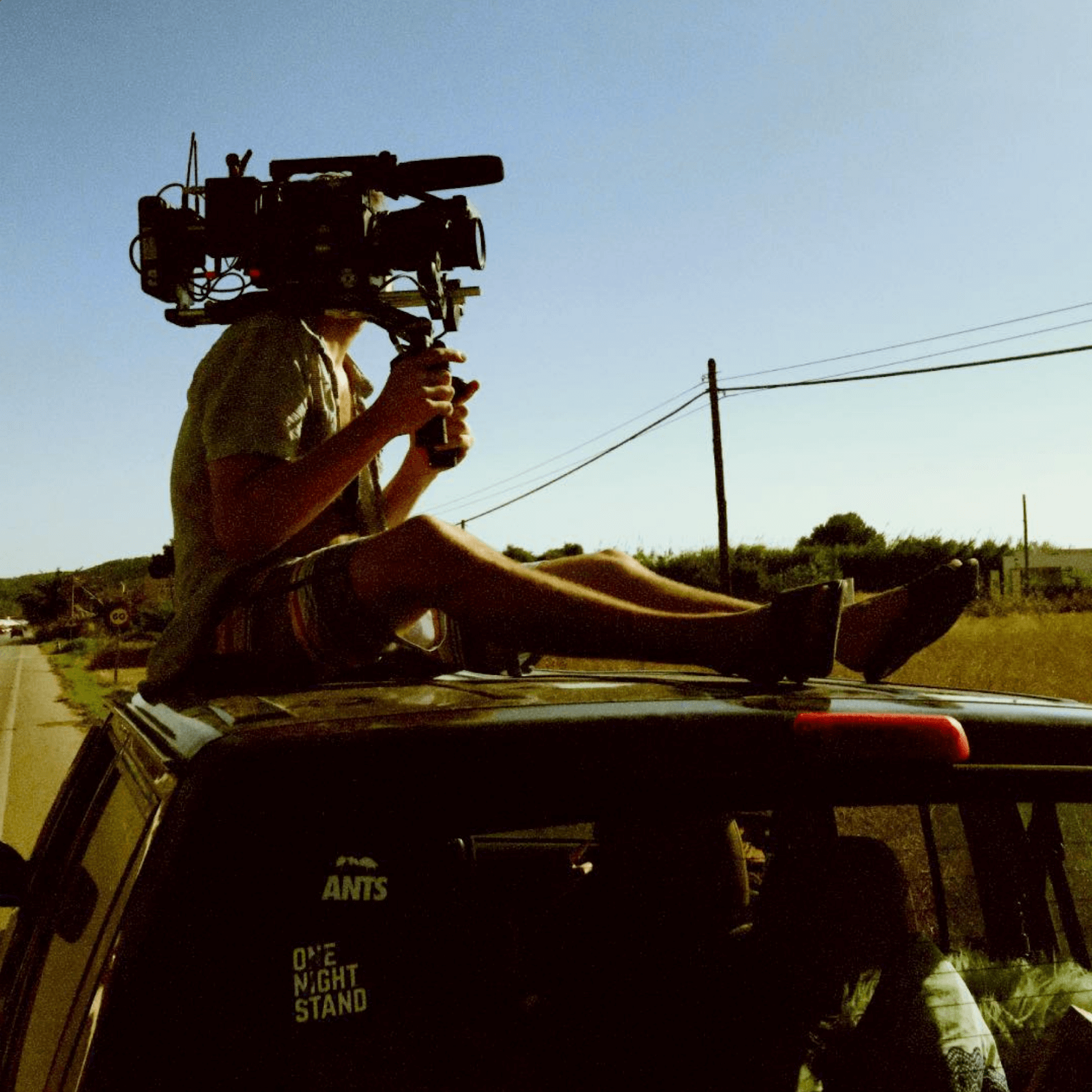 Shooting some scenic B-Roll in Ibiza for Born Balearic (the car was parked)
Working with artists like Father John Misty and Jordan McGraw involves a different kind of energy. How does the rhythm of the music dictate your camera movement?
I had a professor at Ithaca College who used to teach his method of “slap editing” where you would tap your desk to whatever rhythm you were working with, whether it was the beat of a song or the pacing of a scene, and then SLAM on the space bar wherever it felt right for the next cut to land. I think I do some version of that in my head, both in preproduction and on set, especially for music videos. It becomes a way of gauging how camera movement should pace itself against the speed and energy of a track. The Father John Misty video was sort of a reversal of that idea because it was essentially a Steadicam oner (with one partially hidden cut) so it didn’t have edits driving the rhythm the way a traditional music video would. For that music video I spent an evening scouting the Lower East Side with the song on repeat. Walking potential routes the director Noel Paul had laid out, timing out beats against intersections, background transitions, and shifts in movement. The Jordan McGraw music video on the other hand had loads of cuts and complicated setups planned from the start. We had performance setups with both front and rear projection simultaneously, a technocrane, and we used rain heads inside the studio to make it rain inside a three walled set! So much of my energy was put into making sure we got through all these technical setups, but we still drew tons of inspiration for camera movement and pacing from Jordan’s high-energy performance
When you were shooting the Glyph Atom EX SSDs for our recent commercial, what was the most technically interesting shot you composed for this campaign, and how did you balance making the drives look 'heroic' while keeping the environment feeling like a functional, busy production space?
For this shoot I was working with producer/director Andrew Coury of Direct Narrative, and were capturing a few different pieces of content simultaneously. We were using a Bolt Arm — run by the guys at Rambow Studios in the Flatiron District — to shoot high-speed, slow-motion product shots of the new Glyph Atom EX SSDs. At the same time, we were also shooting elevated “behind-the-scenes” footage, with actors playing the photographer and cinematographer on set — using the same production equipment that appeared in the main advertisements for the drives. The choreography of some of the wider studio shots ended up being the most technically complicated. We were timing out the high-speed move on the Bolt arm while a secondary camera was either pulling back or pushing in on a handheld gimbal - trying to create this layered sense of motion within the space while still keeping the product as the centerpiece. Balancing the “heroic” presentation of the drives with the functionality of the environment really came down to letting the production space feel active and believable, but always lighting and framing the SSDs in a way that separated them just enough from the activity around them.
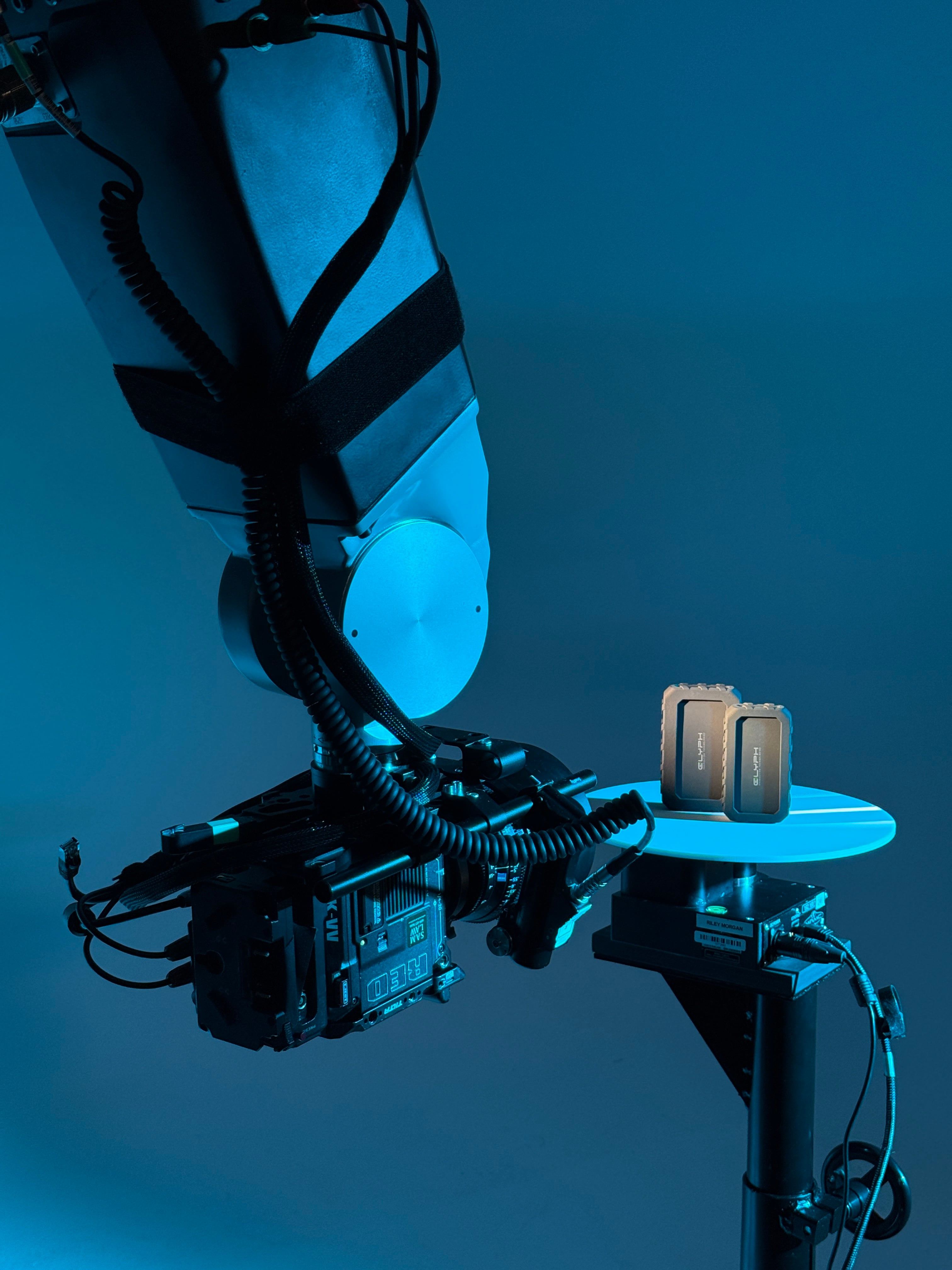 The Bolt Arm at Rambow Studio being used during the Atom EX shoot
 What are three "must-haves" in your kit that you never head to set without?
As much as “My Phone” a very 2026 answer….its true! I find using Artemis ‘view-finder app on my phone to be a really great way to find frames on the fly, and to be able to show them to others on set immediately so departments can have an idea of what’s coming up next. I keep a light meter in my kit at all times - and then most importantly a very comfortable pair of shoes…sometimes two! I have had two ankle surgeries over the years, and one trick I’ve found is that changing to a different pair of shoes at lunch is a true reset for my feet!
With the industry rapidly evolving, what emerging technology (AI, Virtual Production, etc.) are you actually excited to experiment with?
I am staunchly against the encroachment of AI into the video and photo production realm. I like working with people, I like employing people, and I believe artists of all kinds need to be championed. I’ve found that a lot of the current AI video models being developed, and the way they’re being pushed into our industry, run pretty directly counter to those values. I’ve been heartened to see some early research suggesting that audiences are already starting to push back on AI-generated video in advertising. It doesn’t surprise me, there’s something so hollow and inauthentic to it, like you’re being pitched something by a machine instead of a person. I have had a few experiences shooting in Volume Stages, most recently for a branded content spot with the NY Knicks and Lexus. I wasn't totally convinced at first, but after seeing more of the many applications and use cases I am excited to get more time shooting on them! Specifically some of the newer developments in real time pixel mapping and interactive practical lighting on these stages have piqued my interest. I’m still a sucker for shooting things practically and on location - but there’s a lot of expensive problems that can be solved by bringing any location right into your studio.
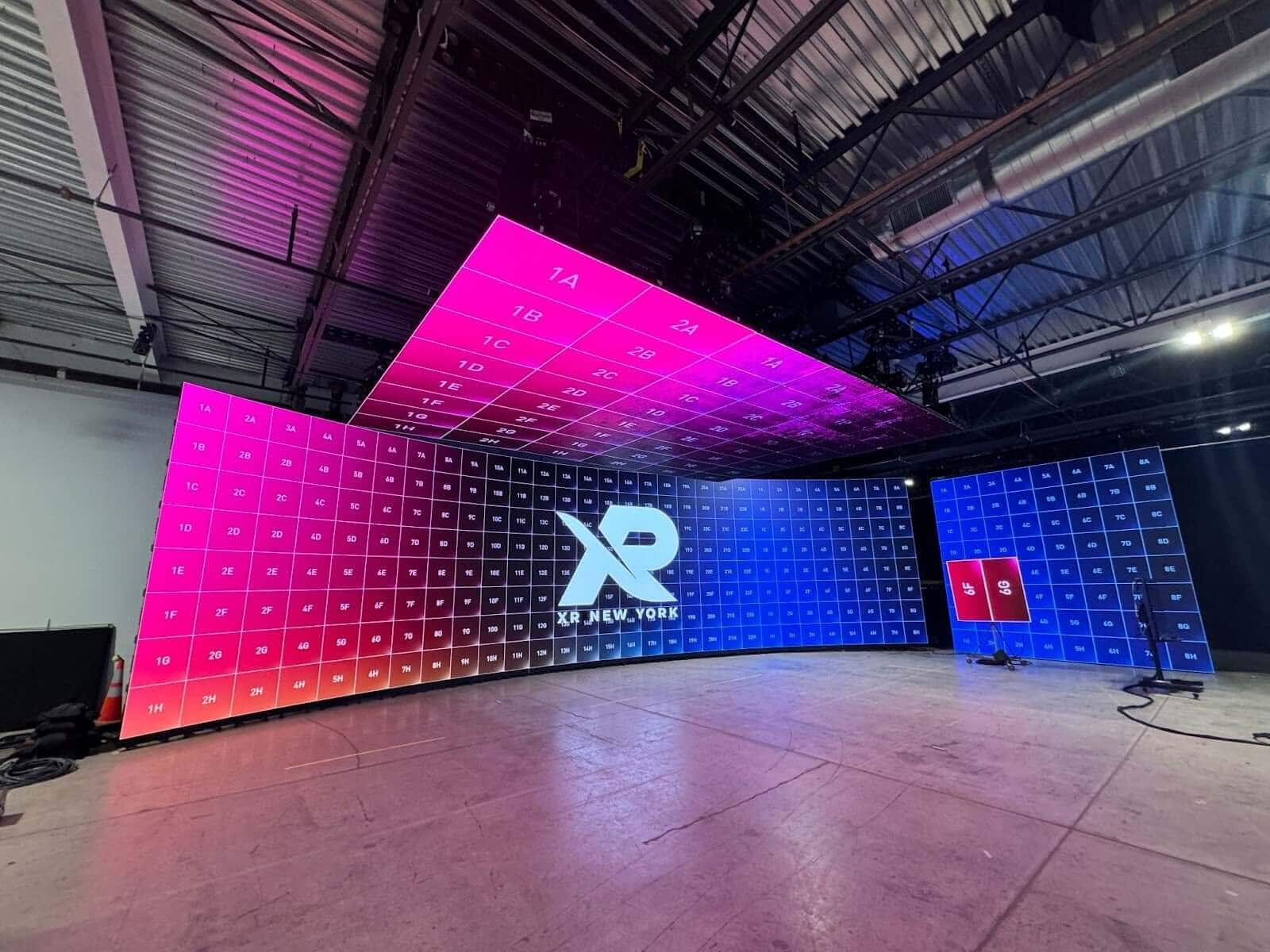 Volume Stage at XR New York in Nyack, NY for Lexus / Knicks
What is the most important lesson an aspiring director of photography should learn that they won’t find in a textbook?
One thing I think every person going into the freelance film world should receive some sort of training in, and rarely does, is small business management. I really believe film schools should make it mandatory for students to take at least a few classes in intro to business, accounting, taxes, and basic financial planning. The reality is, when you become a working cinematographer you’re a small business owner. You manage invoices, negotiate rates, track expenses, deal with insurance, rent gear, pay subcontractors etc. None of that lives in a lighting textbook, but it has a massive impact on whether you can maintain a long-term career in the film industry. I think success in this industry takes as much creative eye, cinematography skill, and drive as it does business savvy.
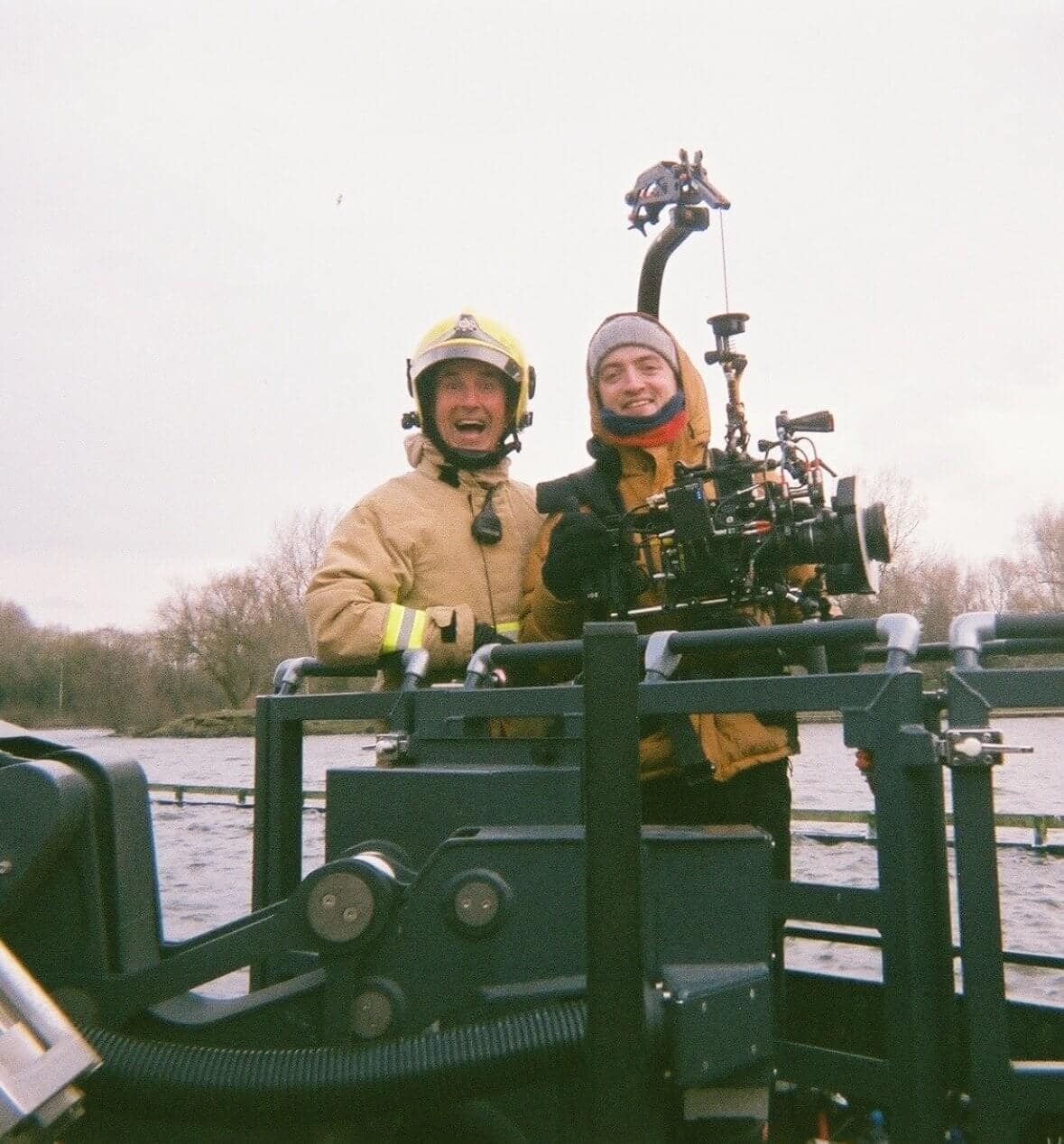 About to go up in a fireman’s lift during a music video shoot in Blackpool, UK
Are there any genres or types of projects you haven't tackled yet that you’re itching to dive into?
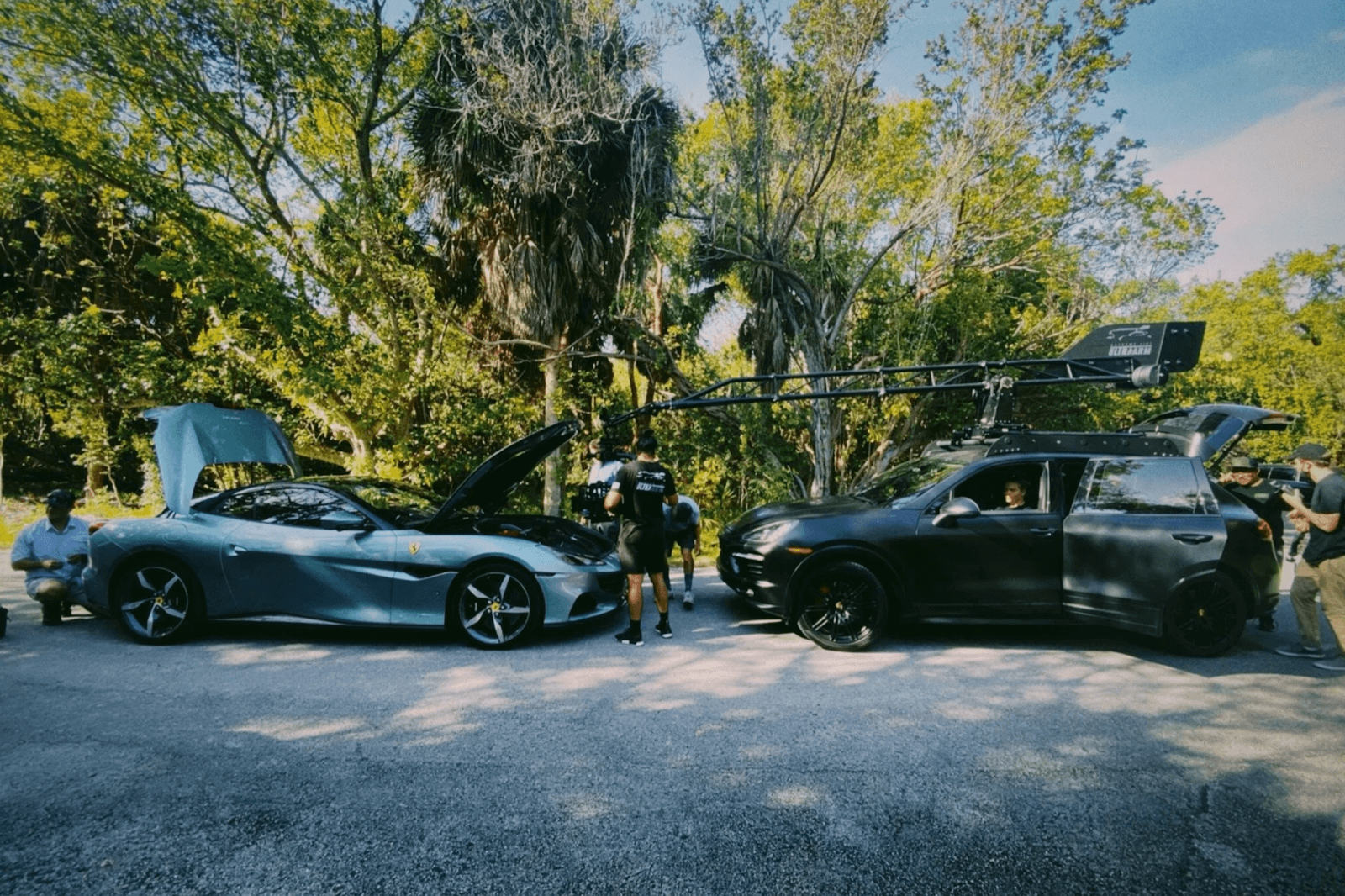
Earlier in my career I did a lot of docu-style travel work in places like Ecuador, Uganda, and the South Pacific, which really pushed me to hone my instincts working in uncontrolled environments. As my work has shifted more toward commercial production in the U.S., I’d love to land a job that puts me back into a remote area but with a bit more production support than I had in the past. I’ve also had a lifelong passion for cars and the automotive world in general. I was lucky enough to shoot a series of ads for the Ferrari Portofino M with Director Jake Rosenberg when it was first released in North America. We somehow stretched a small budget meant for social videos and managed to sneak in two full days with U-CRANE camera cars, plus an FPV drone day. I’d really love to continue down that path and shoot more automotive content — the logistical and technical challenge of putting a camera exactly where you want it at high speeds is some of the most fun problem-solving I’ve done to date. So to combine those two interests, an automotive campaign shot somewhere like Patagonia would be a dream job. Those environments offer such a unique mix of challenges and striking natural visuals, where technical problem-solving and cinematic opportunity collide in a really exciting way.
A huge thank you to Gabe Harden for sharing his time and professional insights with us. Whether he’s leading a crew or shooting our EX drives, Gabe’s commitment to the craft is evident in every frame. To see his full portfolio and stay updated on his upcoming projects, visit his website GabeHarden.com and follow his journey on Instagram at @gabeharden.